BASF is leveraging blockchain technology to enhance traceability and sustainability in cotton production.
+Ammonia prices are increasing in Mexico due to supply constraints, impacting farmers' costs.
+Nutrien Ltd. has finalized the sale of its 50% stake in Profertil S.A. for $600 million, enhancing its financial flexibility.
+Ammonia prices in India have increased due to higher regional FOB levels, impacting fertilizer production costs.
+India's urea imports have surged by 137% as domestic production declines, raising concerns about supply stability.
+OCI Global reports a stable performance in Q3 2025, with strategic initiatives underway to enhance production capacity.
+Nutrien has announced a partnership to match donations aimed at addressing hunger in Saskatoon, Canada.
+Myanmar's Urea Fertilizer Committee has recommended the import of over 1.5 million tonnes of fertilizer to meet domestic demand.
+Mosaic Company has restructured its financial and operational leadership to boost market share amidst competitive pressures.
+Amundi and Bank of Nova Scotia have reduced their stakes in Nutrien Ltd., indicating market volatility.
+The Omega-3 market is projected to reach $30.8 billion globally by 2033, driven by rising consumer awareness.
+A webinar discussing solvent selection in ultra-low volume formulations for precision agriculture applications is scheduled for December 10, 2025.
+Fertiliser production starts with a handful of raw materials — known as upstream feedstocks. Gas, phosphate rock, potash ore, and sulfur form the backbone of the $200B global industry.
Few industrial processes have shaped modern life as profoundly as the Haber–Bosch process. Developed in the early 20th century, it unlocked the ability to capture nitrogen from the air and convert it into ammonia — the foundation of all synthetic nitrogen fertilizers. Without it, global food production could not sustain today’s population.
Nitrogen, phosphorus, and potassium — the three nutrients that underpin modern agriculture — are also among the most carbon-intensive inputs in the food system. Understanding the carbon footprint of NPK fertilizers is essential for anyone thinking about sustainable farming, climate change, and the future of global food production.

MAP (Monoammonium Phosphate) is a concentrated phosphate fertilizer containing both nitrogen and phosphorus. It is widely used in cereals and horticultural crops, especially where soil pH and phosphorus availability are critical.
+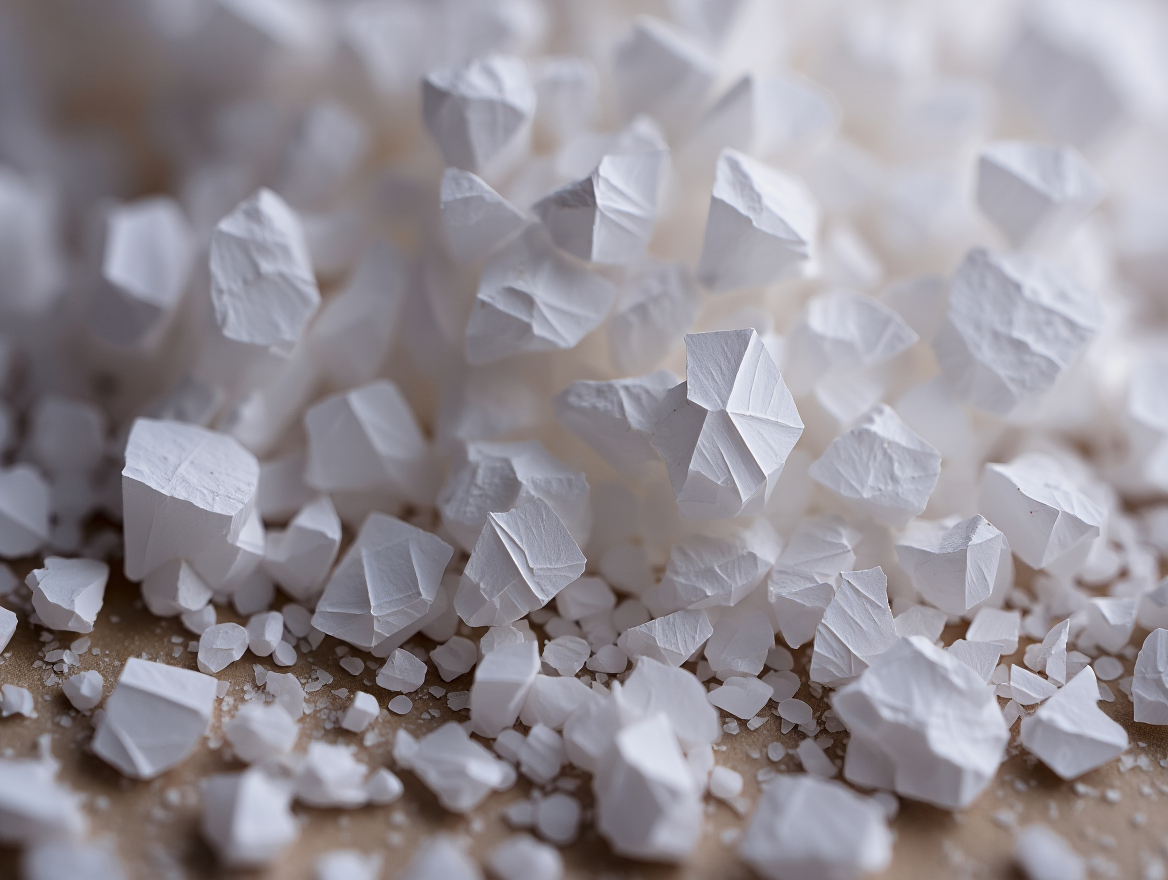
Ammonium sulphate ((NH₄)₂SO₄) supplies both nitrogen and sulphur in one product. Often a by-product of industrial processes, it is especially important for sulphur-hungry crops (oilseeds, legumes) and in regions where atmospheric sulphur deposition has declined.
+